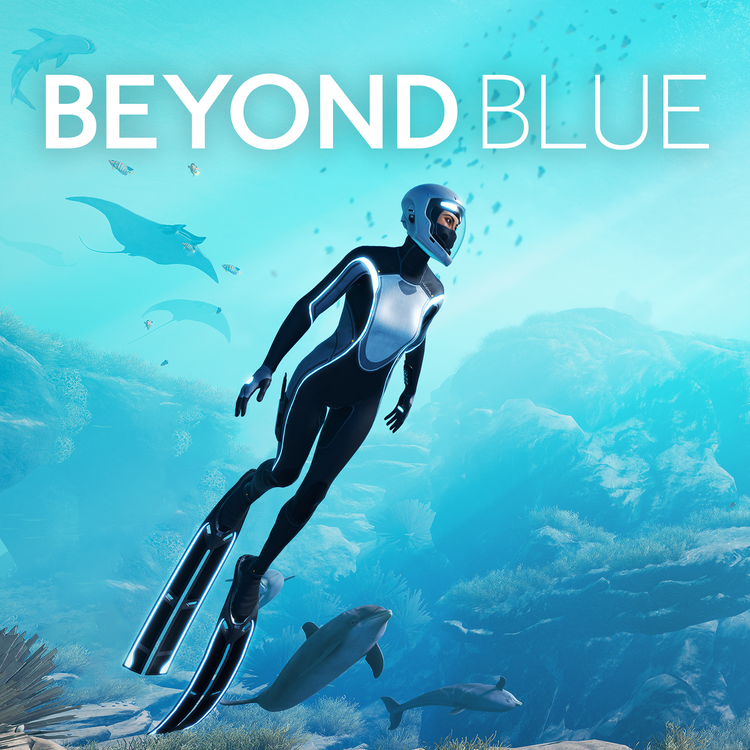
Overview
Beyond Blue is an exploration-based video game that immerses players in the role of a deep-sea scientist studying marine life. Developed by E-Line Media in collaboration with oceanographers, the game offers an engaging and scientifically accurate experience of underwater ecosystems.
Educational Applications
-
Marine Biology & Ecology
The game introduces players to diverse marine species, their behaviors, and the impact of human activities on ocean ecosystems. It serves as an excellent interactive tool for teaching marine biology, biodiversity, and conservation concepts. -
Environmental Science & Conservation
Beyond Blue highlights real-world environmental challenges such as climate change, pollution, and overfishing. It encourages discussions on sustainability and human responsibility in preserving ocean life. -
STEM & Scientific Inquiry
Players take on the role of a marine researcher, using high-tech equipment to observe and collect data. This aspect promotes scientific thinking, hypothesis testing, and problem-solving, aligning with STEM education goals. -
Geography & Earth Sciences
The game provides realistic depictions of ocean biomes, currents, and deep-sea exploration. It can be used to complement lessons on oceanography, plate tectonics, and the role of the ocean in global climate systems. -
Media & Ethics in Science Communication
Beyond Blue includes documentary-style interviews with real marine scientists, allowing students to explore how science is communicated to the public and ethical considerations in conservation efforts.
Benefits for Education
-
Immersive Learning: The interactive, exploratory nature of the game enhances engagement and retention.
-
Cross-Disciplinary Use: It integrates science, geography, and environmental ethics into one experience.
-
Critical Thinking: Encourages students to analyze environmental issues and propose solutions.
-
Accessibility: No violence or fast-paced gameplay makes it suitable for various age groups.
Challenges
-
Limited Gameplay Variety: The lack of high-action elements may not appeal to all students.
-
Supplementary Material Needed: Teachers may need to provide additional discussion guides or assignments to maximize learning outcomes.
Conclusion
Beyond Blue is a valuable educational tool that fosters curiosity about marine science and conservation. Its scientifically accurate content, real-world relevance, and engaging format make it a strong choice for educators looking to introduce students to ocean exploration and environmental stewardship.
Lesson Plan: Exploring Marine Biology & Ecology with Beyond Blue
Grade Level: High School
Duration: 5 lessons (1 hour each)
Subject Focus: Marine Biology, Ecology, Environmental Science
Learning Objectives:
-
Identify and describe marine species and their ecological roles.
-
Analyze the impact of human activities on ocean ecosystems.
-
Explore conservation strategies and the role of scientific research.
-
Develop critical thinking and problem-solving skills through inquiry-based learning.
Lesson Sequence Overview
| Lesson | Topic | Activities | Assessment |
|---|---|---|---|
| Lesson 1 | Introduction to Marine Ecosystems | Gameplay introduction, ecosystem structure, trophic levels | Entry quiz, group discussion |
| Lesson 2 | Biodiversity & Species Adaptations | Identifying species, behavioral analysis | Observation journal |
| Lesson 3 | Human Impact on Oceans | Pollution, overfishing, climate change | Debate, case study |
| Lesson 4 | Conservation & Marine Research | Role of scientists, conservation efforts | Research presentation |
| Lesson 5 | Reflection & Solutions | Summarizing learning, proposing solutions | Project-based assessment |
Lesson 1: Introduction to Marine Ecosystems
Objective: Understand the basic structure of marine ecosystems and the roles of different organisms.
Activities:
-
Warm-up (10 min): Entry quiz on prior knowledge of marine ecosystems.
-
Main Activity (30 min): Students explore an ocean biome in Beyond Blue, taking notes on species, food chains, and interactions.
-
Discussion (15 min): Groups compare findings and discuss ecosystem balance.
-
Exit Ticket (5 min): Write one interesting fact and one question about marine ecosystems.
Assessment: Entry quiz, participation in discussion, exit ticket.
Lesson 2: Biodiversity & Species Adaptations
Objective: Identify species, their behaviors, and adaptations to the marine environment.
Activities:
-
Introduction (10 min): Brief lesson on biodiversity and adaptation.
-
Gameplay (30 min): Students identify and document at least five marine species, noting unique adaptations.
-
Observation Journal (15 min): Compare species and discuss adaptations for survival.
-
Wrap-up (5 min): Quickfire Q&A on key takeaways.
Assessment: Observation journal entries.
Lesson 3: Human Impact on Oceans
Objective: Analyze the impact of human activities on marine ecosystems.
Activities:
-
Discussion (10 min): What are human threats to oceans? Brainstorming session.
-
Gameplay (30 min): Students observe evidence of pollution, overfishing, or climate effects.
-
Debate (15 min): “Are we doing enough to protect marine life?”
-
Reflection (5 min): Write one way individuals can reduce ocean damage.
Assessment: Participation in debate, written reflection.
Lesson 4: Conservation & Marine Research
Objective: Learn about conservation strategies and the role of scientists in protecting marine ecosystems.
Activities:
-
Mini-Lecture (10 min): Overview of conservation methods.
-
Gameplay (30 min): Focus on conservation missions in Beyond Blue.
-
Group Research (15 min): Each group investigates a real-world marine conservation effort.
-
Wrap-up (5 min): Groups present findings.
Assessment: Group research presentation.
Lesson 5: Reflection & Solutions
Objective: Synthesize knowledge and propose solutions for ocean conservation.
Activities:
-
Review (10 min): Recap key lessons from the game.
-
Project Work (30 min): Students design a poster, video, or short essay on ocean conservation solutions.
-
Gallery Walk (15 min): Students present projects.
-
Final Reflection (5 min): Exit survey on learning experience.
Assessment: Final project and reflection survey.
Differentiated Instruction
Advanced Students:
-
Extension: Research real-world scientific projects related to Beyond Blue.
-
Assessment: Present additional findings and propose an action plan for conservation.
On-Level Students:
-
Scaffolding: Provide guided worksheets for gameplay observations.
-
Assessment: Complete structured research with support.
Struggling Students:
-
Support: Small group discussions, video resources, and simplified note-taking templates.
-
Assessment: Verbal reflections and group participation instead of written reports.
Final Thoughts
Using Beyond Blue in the classroom enhances student engagement by combining scientific inquiry, critical thinking, and real-world conservation issues. By integrating gameplay with structured discussions and assessments, students develop a deep appreciation for marine life and the importance of protecting our oceans.