Exploring AI's Role in Education
Transforming Classrooms with AI
Discover how artificial intelligence is reshaping the educational landscape, offering innovative solutions for personalized learning and enhancing teaching methodologies.
AI in Modern Education
Revolutionizing Learning with AI
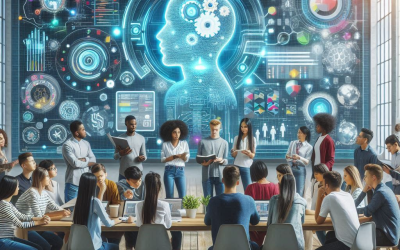
Artificial intelligence is revolutionizing education by providing personalized learning experiences that cater to individual student needs. With AI, educators can offer more tailored instruction, ensuring that each student progresses at their own pace. This technology not only enhances learning outcomes but also prepares students for a future where AI will play a significant role in various industries. By integrating AI tools, schools can foster a more engaging and efficient learning environment, equipping students with the skills necessary for success in the digital age.
Key Features of AI-Driven Learning

Adaptive Learning Paths
AI creates customized learning journeys, adapting to each student’s strengths and weaknesses to optimize their educational experience.

Real-Time Feedback
Instant feedback mechanisms powered by AI help students understand their progress and areas for improvement, enhancing the learning process.

Predictive Analytics
AI utilizes data to predict student performance, allowing educators to intervene early and provide targeted support where needed.
AI Tools for Educators
Empowering Classrooms with AI
Smart Curriculum Planner
Enhance lesson planning with AI-driven insights, optimizing curriculum structure for diverse learning needs.
Virtual Teaching Assistant
Provide real-time support to students, answering questions and offering guidance through AI-powered chatbots.
Automated Grading System
Streamline assessment processes with AI that evaluates student work, providing instant feedback and reducing teacher workload.
Personalized Learning Platforms
Adapt educational content to individual student pace and style, fostering a more engaging learning experience.
AI-Powered Analytics
Gain insights into student performance and learning trends through comprehensive data analysis tools.
Interactive Learning Environments
Create immersive educational experiences using AI to simulate real-world scenarios and enhance understanding.
AI in Education: A Historical Journey
Explore the transformative journey of AI in education, marking significant milestones that have shaped modern learning.
'90s
Foundations and Early Experiments
-
Intelligent Tutoring Systems (ITS) gained traction (e.g. Andes, AutoTutor).
-
Focus was on logic-based AI and rule-driven systems.
-
Used mainly in higher education and research settings.
-
Adaptive learning was experimental and limited in reach.
'00s
Web-Based Learning and Early Adaptivity
-
Rise of e-learning platforms and Learning Management Systems (LMS) (e.g. Moodle, Blackboard).
-
Basic AI used for quiz generation, progress tracking, and simple adaptivity.
-
Natural Language Processing (NLP) began to be explored for grading and tutoring.
'10s
AI Becomes Practical
-
Machine learning and big data enable more personalized learning.
-
Adaptive learning platforms like Knewton, DreamBox, and Smart Sparrow emerged.
-
Chatbots and automated essay grading started appearing.
-
Early uses of AI in learning analytics to predict student success and dropouts.
'20s
AI Goes Mainstream
-
Generative AI (e.g. ChatGPT) transforms content creation, tutoring, and language learning.
-
Teachers use AI for lesson planning, feedback, and student support.
-
Widespread adoption in tools like Khanmigo, Duolingo Max, Quizlet AI, and Socratic.
-
Ethical concerns grow: bias, academic integrity, over-reliance.
-
AI literacy becomes a new educational goal.
The Future of AI in Education
As we look to the future, AI promises to revolutionize education by making learning more personalized, accessible, and efficient. Innovations such as AI-driven virtual reality environments and advanced predictive analytics are set to transform how students engage with content. These technologies will not only cater to individual learning styles but also prepare students for a rapidly changing world. At EduThinkering, we are committed to exploring these advancements and sharing insights into how AI will continue to shape the educational landscape. Join us as we delve into the possibilities that AI holds for the future of learning.

Essential AI Tools for Students – Comparative Chart by Education Level
Here’s a comparative chart outlining essential AI tools for students at primary, secondary, and tertiary levels to build meaningful 21st-century AI literacy. The tools and skills are aligned with cognitive development, digital responsibility, and curriculum...

AI Tools Every Tertiary Student Should Master to Build Real-World AI Literacy
AI is no longer just a buzzword in tech circles—it’s a central part of the tools and platforms you already use for studying, creating, researching, and even job hunting. From writing assistants to design tools, AI is changing how we work, think, and learn. But using...

Essential AI Tools for High School Students to Build 21st-Century AI Literacy
Artificial intelligence is no longer a distant concept in science fiction—it's woven into the apps, websites, and services students use every day. For high school learners, developing AI literacy isn't just an advantage—it's becoming a fundamental skill for future...

AI Tools Every Primary and Middle School Student Should Explore to Build Digital Literacy
Artificial Intelligence (AI) is already part of the world that children live in—from voice assistants like Alexa and Siri to the smart suggestions in YouTube, Google, and even Minecraft. As AI becomes more common in everyday life, students need to do more than just...

How AI Is Transforming Digital Literacy—and What Educators Need to Know
As educators, we’ve long championed digital literacy as a foundational skill for students navigating an increasingly connected world. But with the rapid rise of artificial intelligence (AI), the very definition of digital literacy is shifting—and so too is our role in...

Critical Thinking in the Age of AI
Artificial Intelligence has rapidly transitioned from science fiction to daily reality. Tools like ChatGPT, image generators such as Midjourney and DALL·E, and recommendation engines powering our news feeds, video suggestions, and shopping habits are astonishingly...

Teaching Tomorrow’s Thinkers: How Educators Can Build Student Literacy for Effective AI Use and Prompt Engineering
As AI tools become more common in education and everyday life, one truth is becoming clear: the quality of a student’s thinking now directly affects the quality of AI responses they’ll get. Tools like ChatGPT, Gemini, and Copilot aren’t replacing thinking—they’re...

Personal Literacy: The Hidden Superpower Behind Effective Prompt Engineering
As artificial intelligence continues to integrate into our work, learning, and daily lives, there's one often-overlooked factor that separates average users from power users: Your ability to know yourself—and express it clearly. Welcome to the intersection of personal...

Why Prompt Engineering Matters: The Key to Unlocking AI’s Full Potential
In the era of generative AI, one skill is quickly emerging as a game-changer across industries: prompt engineering. It may sound technical, but at its core, prompt engineering is simply the art and science of asking the right questions—and it’s reshaping how we...